Angular Design Patterns and Best Practices Angular is a popular JavaScript framework used for building complex web applications. As the framework continues to evolve, it's essential to stay up-to-date with the latest design patterns and best practices to ensure your application is scalable, maintainable, and efficient. In this post, we'll cover some of the most commonly used Angular design patterns and best practices, along with providing a link to a comprehensive PDF resource. Design Patterns
Modular Design Pattern : Break down your application into smaller, independent modules, each with its own responsibility. This pattern helps reduce complexity and makes it easier to maintain and scale your application. Singleton Pattern : Use a singleton pattern to create a single instance of a service that can be shared across the application. Factory Pattern : Use a factory pattern to create instances of services or components without specifying the exact class of object that will be created. Observer Pattern : Use the observer pattern to communicate between components and services, allowing for loose coupling and easier maintenance.
Best Practices
Separate Concerns : Keep your components, services, and templates separate and focused on a single responsibility. Use Services : Use services to encapsulate business logic and share data between components. Use Observables : Use observables to handle asynchronous data and events. Avoid Tight Coupling : Avoid tight coupling between components and services by using interfaces and dependency injection. Use Angular CLI : Use the Angular CLI to generate components, services, and modules, and to run your application. angular design patterns and best practices pdf
PDF Resource For a more comprehensive guide to Angular design patterns and best practices, check out the following PDF resource:
Angular Design Patterns and Best Practices (official Angular documentation)
This PDF guide covers a wide range of topics, including: Angular Design Patterns and Best Practices Angular is
Angular architecture and design principles Component design patterns Service design patterns Template design patterns Best practices for coding and testing
Conclusion By following these Angular design patterns and best practices, you can create scalable, maintainable, and efficient applications. Remember to stay up-to-date with the latest developments in the Angular ecosystem and to continuously improve your skills and knowledge. Additional Resources
Angular Official Documentation Angular GitHub Repository Angular Community Forum Design Patterns Modular Design Pattern : Break down
I hope this helps! Let me know if you have any questions or need further clarification. Below is an example of a detailed table of content for an assumed eBook/ Guide Table of Content Part 1: Angular Fundamentals
Chapter 1: Introduction to Angular Chapter 2: Setting Up the Environment Chapter 3: Understanding Angular Modules

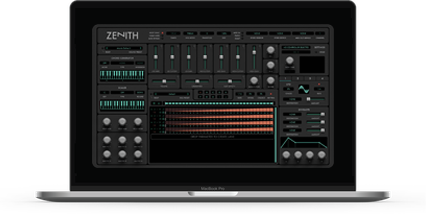
As a feature-rich MIDI processor with a host of filters, chorder, scaler, LFOs, envelopes, and 24 x 32 step sequencers controlling MIDI CCs, pitch, velocity and gate at a variety of rates - with complex tools and presets for modifying lanes. Or as a handy custom interface for simply controlling MIDI and SysEx receiving gear.
Zenith features 200+ presets, with pre-configured maps for over 100 devices and is AU / VST2 compatible for PC/Mac.

AN EXTENSIVE PRESET LIBRARY
200+ presets offering default maps for popular software/hardware including Serum, Massive, Sylenth, Roland Juno 106, MKS-80, Yamaha DX7 and much more.
CUSTOMISABLE CONTROL SURFACE
Easily map knobs, faders, sliders, LFOs, filters, and envelopes to MIDI CC and SysEx functions in any device - realise unparalleled sound generation functionality in MIDI gear and soft synths.
POWERFUL MIDI CC SEQUENCER
Individual sequencers for up to 24 x MIDI CCs, each running at up to 27 unique rates with 100 sequence lane presets and a variety of unique lane modifiers.
CHORDER, SCALER, VELOCITY LIMITER
Smart chord generator with support for up to 792 individual chords, automatic scale generation and note velocity manipulation.
CUSTOM SYSEX SCRIPTING
Easily add obscure SysEx devices and unlock unique functionality in rare, vintage hardware - or simple MIDI learn function for compatible soft synths.
