14-Day Returns* · 2-Year Warranty · Worldwide Shipping, US Included
14-Day Returns*
2-Year Warranty
Worldwide Shipping, US Included
A shriek in the rain often marks the moment a character can no longer contain their anxiety or sadness , using the storm's noise to mask their own. The Psychological Impact
Shrieking in the rain is not pathology nor performance art. It is a mundane, ancient, and deeply human coping mechanism. We propose further research into —how atmospheric conditions license or suppress emotional expression. Future studies might compare self-reported relief levels between rain-screaming, pillow-screaming, and silent crying. Until then, we conclude: if you find yourself walking in a downpour with a knot in your chest, the storm has already given you leave. Let it out.
"Shrieking in the rain" may be a melodramatic trope, but it is rooted in a very human need to be heard by the universe when we feel we cannot be heard by anyone else. It is a rebellion against the expectation of stoicism.
The rain creates a natural "white noise" barrier. It drowns out the nuances of the world. When you scream in a quiet room, you hear the echo of your own voice, which can lead to self-consciousness or shame. You worry about neighbors, about being heard, about sounding "crazy."
Psychologically, crying or shouting alone can provide relief, but often feels hollow or performative (who is the audience? oneself?). Shrieking in the rain solves this through absent presence . The rain acts as a non-judgmental other —vast, indifferent, absorbing. The shrieker is both utterly alone and held by an elemental force. This mirrors certain therapeutic techniques (e.g., primal therapy, wilderness rites), but requires no facilitator, only weather.
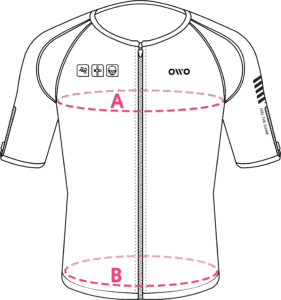
Measure your chest (A) and hips (B) following our indications.
The reference measurement will always be the larger of the two (A or B).
Look in the chart to which size corresponds to that measurement.
| Size | Reference measurements | |
|---|---|---|
| Inches | Centimeters | |
| 2XS | 25.6 – 29.4 | 65 – 74 |
| XS | 29.5 – 32.6 | 75 – 82 |
| S | 32.7 – 36.1 | 83 – 91 |
| M | 36.2 – 39.7 | 92 – 100 |
| L | 39.8 – 42.8 | 101 – 108 |
| XL | 42.9 – 46.3 | 109 – 117 |
| 2XL | 46.4 – 49.9 | 118 – 126 |
| 3XL | 50 – 53 | 127 – 134 |
| 4XL | 53.1 – 55.9 | 135 – 142 |